
 Author Esenceweb
In 2026, mobile app development is evolving faster than ever, driven by cutting-edge technologies like AI, cloud computing, 5G, and IoT integration. Businesses are increasingly investing in custom mobile app development to enhance user experience, boost engagement, and accelerate digital transformation. If you want to stay ahead in the competitive market, understanding the latest mobile app development trends 2026 is essential for building scalable, secure, and high-performing applications.
1. AI-Powered Mobile Apps & Automation
Artificial Intelligence (AI) is at the forefront of mobile app development trends 2026, transforming how businesses design, develop, and deliver user experiences. Modern AI-powered mobile apps are no longer just functional—they are intelligent, adaptive, and highly personalized. By integrating machine learning (ML), natural language processing (NLP), and predictive analytics, developers can create apps that understand user behavior, preferences, and intent in real time. One of the biggest advantages of AI in mobile app development is personalization. Apps can analyze user data to provide tailored recommendations, dynamic content, and customized interfaces. For example, e-commerce apps suggest products based on browsing history, while streaming apps recommend content using AI algorithms. This level of personalization significantly improves user engagement, retention rates, and conversion rates.
One of the biggest advantages of AI in mobile app development is personalization. Apps can analyze user data to provide tailored recommendations, dynamic content, and customized interfaces. This improves user engagement, retention rates, and conversion rates.
2. 5G Technology for High-Speed Performance
The rapid adoption of 5G technology is revolutionizing mobile app development in 2026 by delivering ultra-fast connectivity, reduced latency, and enhanced network reliability. Compared to previous generations, 5G offers significantly higher data speeds, enabling developers to build high-performance mobile applications that deliver seamless, real-time user experiences. One of the biggest advantages of 5G in mobile application development is its ability to support advanced technologies like Augmented Reality (AR), Virtual Reality (VR), and Artificial Intelligence (AI). Developers can create immersive AR/VR experiences, smart AI-driven applications, and cloud-based mobile solutions without performance bottlenecks. This opens new opportunities in industries such as e-commerce, healthcare, education, and entertainment.
5G supports advanced technologies like Augmented Reality (AR), Virtual Reality (VR), and Artificial Intelligence (AI), enabling immersive experiences across industries such as e-commerce, healthcare, and entertainment.
3. Cloud-Based Mobile App Development
Cloud-based mobile app development is one of the most powerful trends in 2026, enabling businesses to build scalable, flexible, and high-performance mobile applications. By leveraging cloud computing technologies, developers can create apps that store and process data on remote servers instead of relying solely on device storage, resulting in faster performance and seamless user experiences. One of the biggest advantages of cloud mobile apps is real-time data synchronization. Users can access updated data instantly across multiple devices, making it ideal for enterprise apps, e-commerce platforms, and SaaS-based mobile applications. This ensures consistency, improves collaboration, and enhances overall productivity. Cloud integration also significantly improves app scalability. Businesses can easily scale resources up or down based on user demand without affecting performance. This is especially beneficial for startups and growing businesses that need cost-effective mobile app development solutions without heavy infrastructure investment.
One of the biggest advantages is real-time data synchronization, allowing users to access updated information across devices. Cloud apps also improve scalability, making them ideal for startups and growing businesses.
4. Enhanced Mobile App Security
In 2026, mobile app security has become a critical pillar of mobile app development, as cyber threats, data breaches, and privacy concerns continue to rise. Businesses handling sensitive user data—such as personal information, financial details, and login credentials—must prioritize secure mobile app development to build trust and ensure compliance with global data protection standards. Modern mobile application security goes beyond basic protection and focuses on a multi-layered approach that safeguards both the app and its backend infrastructure. Developers are implementing end-to-end encryption, ensuring that all data transmitted between users and servers remains secure and unreadable to unauthorized parties.
Developers implement end-to-end encryption and advanced security protocols to ensure safe data transmission and compliance with global data protection standards.
5. Cross-Platform App Development
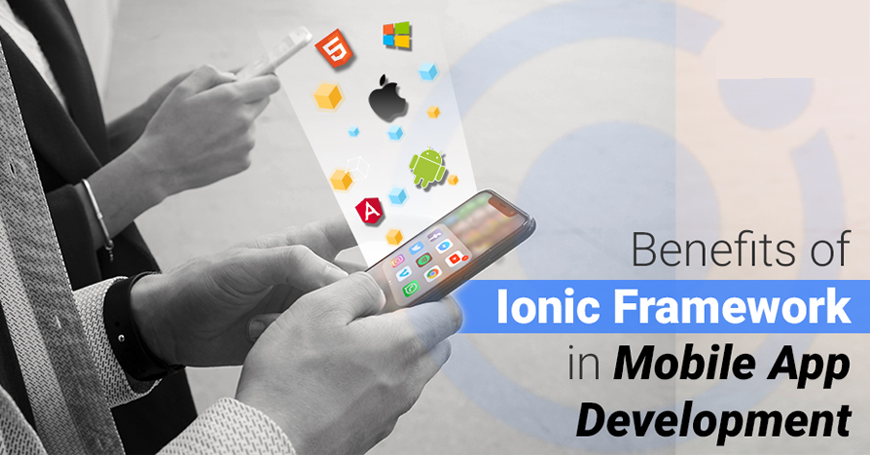
Cross-platform app development is one of the most powerful trends in mobile app development 2026, allowing businesses to build a single application that runs seamlessly on multiple platforms like Android and iOS. Instead of developing separate apps for each platform, developers use a unified codebase to create high-performance, scalable mobile applications, saving both time and cost. One of the biggest advantages of cross-platform development is cost efficiency. Companies can significantly reduce development and maintenance costs by using a single codebase, eliminating the need for separate teams for Android and iOS development. Additionally, updates and bug fixes can be deployed simultaneously across all platforms, improving operational efficiency. From a business perspective, cross-platform mobile apps help increase user engagement and maximize ROI. They allow brands to reach a larger audience with minimal investment while maintaining app quality and performance. This makes it an ideal solution for startups, SMEs, and enterprises looking for cost-effective mobile app development solutions.
It improves efficiency by allowing simultaneous updates across platforms while increasing user engagement and maximizing ROI.
6. Internet of Things (IoT) Integration
IoT integration in mobile app development is enabling seamless connectivity between smart devices, wearables, home automation systems, and industrial equipment. IoT-powered mobile apps allow users to control and monitor devices in real time, improving efficiency and convenience. For businesses, IoT mobile apps offer valuable insights through real-time data collection, analytics, and automation. Industries like healthcare use IoT apps for remote patient monitoring, while smart homes rely on mobile apps for device control and energy management. As the demand for connected ecosystems and smart technology grows, integrating IoT into mobile app development solutions helps businesses deliver innovative, data-driven, and scalable applications.
IoT mobile apps provide real-time data, automation, and insights, making them valuable for industries like healthcare, smart homes, and manufacturing.
7. AR & VR-Based Mobile Applications
Augmented Reality (AR) and Virtual Reality (VR) are revolutionizing mobile app development by delivering immersive and interactive user experiences. These technologies are widely used in industries like gaming, e-commerce, real estate, healthcare, and education. AR-powered apps allow users to visualize products in real-world environments, improving customer engagement and purchase decisions in e-commerce. Meanwhile, VR apps provide fully immersive experiences, making them ideal for training, virtual tours, and simulations. Businesses investing in AR/VR mobile app development can significantly enhance user interaction, brand engagement, and customer retention. With the growth of 5G and advanced mobile hardware, AR/VR apps are expected to become a mainstream trend in next-generation mobile applications.
AR apps enhance product visualization, while VR apps provide fully immersive environments for training and simulations.
8. Low-Code & No-Code App Development
The rise of low-code and no-code app development platforms is revolutionizing how businesses build applications. These platforms allow developers and non-technical users to create apps using drag-and-drop interfaces, pre-built templates, and minimal coding, significantly reducing development time and cost. Low-code mobile app development enables faster deployment of business applications, CRM systems, and enterprise solutions, while still allowing customization and scalability. On the other hand, no-code platforms empower startups and small businesses to launch apps without hiring large development teams.
These platforms enable rapid deployment of business apps, CRM systems, and enterprise solutions, making development more accessible and efficient.
9. Progressive Web Apps (PWAs)
Progressive Web Apps (PWAs) are redefining mobile app development by combining the best features of web applications and native mobile apps. PWAs are fast, reliable, and can work offline, providing a seamless user experience even with limited internet connectivity. One of the biggest advantages of PWA development is cost efficiency, as businesses can maintain a single application instead of separate Android and iOS apps. PWAs also offer faster loading speeds, push notifications, responsive design, and improved SEO performance, making them ideal for e-commerce platforms and business websites. With increasing demand for lightweight, high-performance mobile solutions, PWAs are becoming a popular choice for businesses aiming to improve user engagement, conversion rates, and mobile-first experiences.
PWAs improve performance, reduce development costs, and offer features like push notifications and responsive design, making them ideal for businesses.
10. Blockchain in Mobile Apps
Blockchain in mobile app development is transforming how businesses handle security, transparency, and digital transactions. By leveraging decentralized technology, mobile apps can eliminate intermediaries, reduce fraud, and ensure tamper-proof data storage. This is especially impactful in industries like fintech, healthcare, supply chain, and e-commerce mobile apps. Modern blockchain mobile apps use smart contracts, distributed ledgers, and cryptographic encryption to automate processes and enhance trust. For example, fintech apps enable secure peer-to-peer transactions, while healthcare apps ensure safe patient data sharing. As cybersecurity threats rise, integrating blockchain technology in mobile apps is becoming a key strategy for building secure, scalable, and future-ready applications.
Blockchain apps use smart contracts and decentralized systems, making them highly useful in fintech, healthcare, and supply chain industries.
Conclusion
The future of mobile app development in 2026 is driven by innovation and scalability. Businesses adopting trends like AI, 5G, cloud computing, IoT, and cross-platform development can build powerful applications that deliver exceptional user experiences and drive growth.
Investing in custom mobile app development services ensures your business stays competitive and maximizes ROI in today’s digital-first world.
FAQs
1. What are the latest mobile app development trends in 2026?
AI integration, 5G technology, cloud-based apps, IoT, and cross-platform development are the top trends.
2. Why is mobile app development important for businesses?
It enhances customer engagement, improves brand visibility, and drives revenue growth.
3. Which technology is best for mobile app development?
Technologies like Flutter, React Native, AI, and cloud computing are widely used in 2026.
4. How much does mobile app development cost?
The cost depends on features, complexity, platform, and development time.
5. What is the future of mobile app development?
The future lies in AI-powered, scalable, secure, and high-performance mobile applications.










.png)
_(1).jpg)
_(2).jpg)
.jpg)

_(1).jpg)

.jpg)
.jpg)
.jpg)
.jpg)
.jpg)


.jpg)
_(1).jpg)
.jpg)
.jpg)


_(1).png)

.png)

1.png)


















4.png)







0 Replies to “Mobile App Development Trends 2026”
Leave a Reply
Your email address will not be published.