
 Author Esenceweb
AI Integration in Custom Software: Smarter, Faster, More Efficient
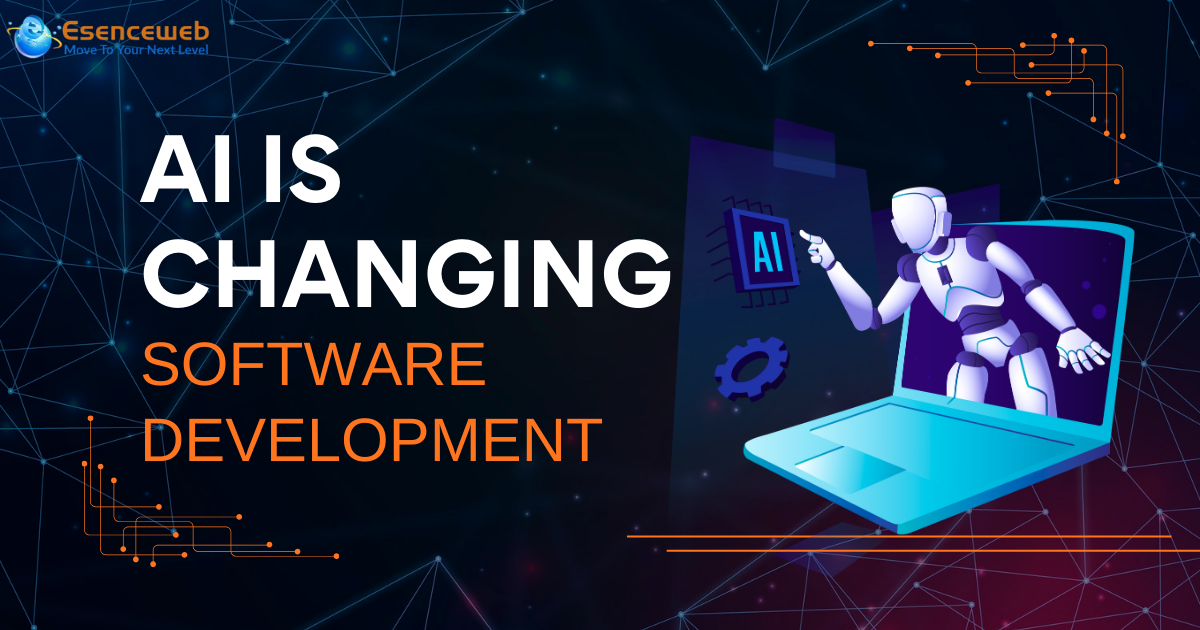
The custom software development industry is undergoing a massive transformation driven by Artificial Intelligence (AI). What once depended entirely on manual coding, static workflows, and traditional development cycles has evolved into an intelligent, automated, and data-driven ecosystem. Today, AI in custom software development is not just a competitive advantage it is becoming a necessity. Businesses demand faster deployment, smarter decision-making systems, predictive analytics, automation, and stronger cybersecurity. AI-powered software development is meeting these demands by reshaping how applications are designed, built, tested, and maintained. In 2026 and beyond, artificial intelligence in software development will define the future of digital transformation.
The Rise of AI in the Custom Software Development Industry
The global custom software development industry is shifting from rule-based programming to intelligent, adaptive systems. Traditional applications followed fixed logic. In contrast, AI-driven software solutions can:
- Learn from
data
- Adapt to user behavior
- Identify patterns
- Predict
outcomes
- Automate decisions
- Improve performance over time
This evolution allows businesses to move from reactive systems to proactive, intelligent software applications.
AI-powered custom software development enables companies to build solutions that are not only functional but also intelligent and scalable.
AI Across the Software Development Lifecycle (SDLC)
Artificial intelligence in software development is transforming every stage of the software development lifecycle.
1. AI in Requirement Analysis & Planning
AI tools analyze
historical project data, user requirements, and market trends to: •
Improve project estimation accuracy
- Identify risks early
- Suggest
optimal technology stacks
- Optimize resource allocation
This reduces planning errors and enhances efficiency in custom software development projects.
2. AI-Powered Code Generation and Smart Development
One of the most visible changes in the custom software development industry is AI-assisted coding.
Tools like GitHub Copilot and solutions developed by OpenAI help developers:
- Generate code snippets instantly
- Auto-complete
complex logic
- Detect vulnerabilities
- Optimize algorithms
-
Translate plain language into executable code
This form of AI-powered software development significantly reduces development time and enhances productivity. Developers can focus on architecture and innovation rather than repetitive tasks.
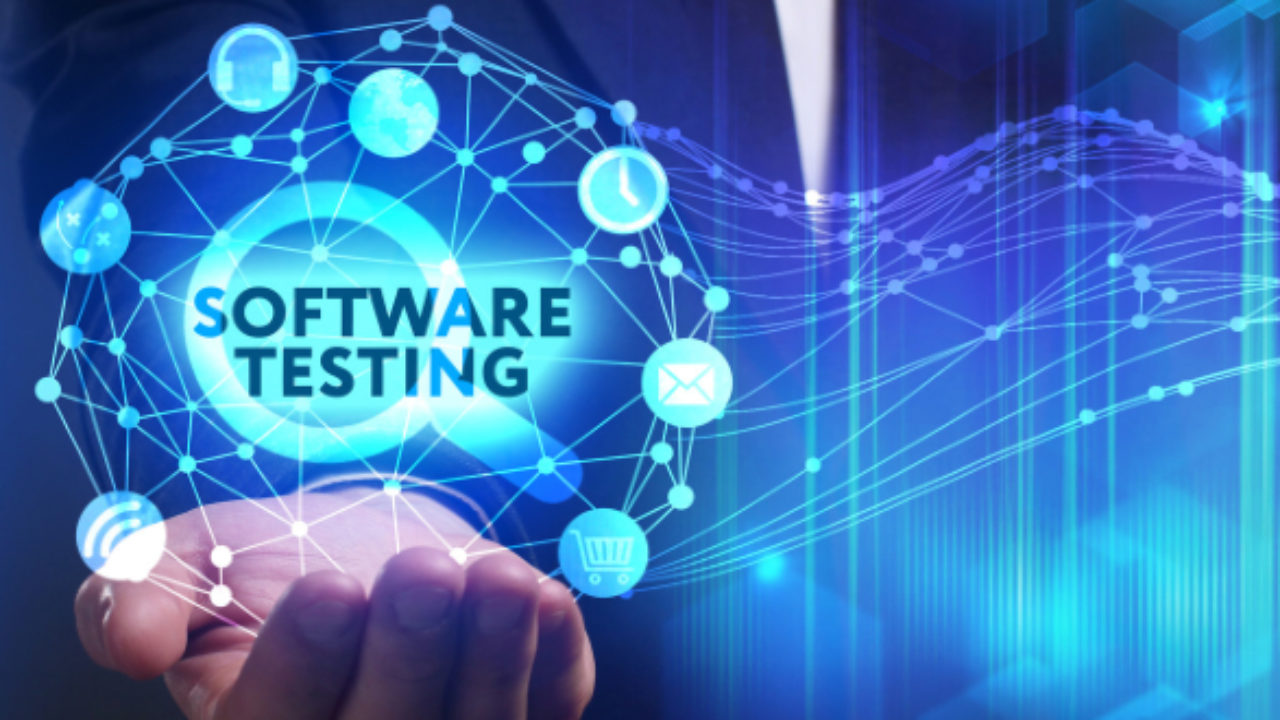
3. Intelligent Testing and Quality Assurance
Testing is one of the most resource-intensive phases of custom software development. AI changes this through:
- Automated test case
generation
- Self-healing scripts
- Predictive bug detection
- Performance anomaly monitoring
- Automated regression testing
AI-driven testing improves software reliability while reducing time-to-market. Businesses benefit from fewer post-deployment issues and lower maintenance costs.
This demonstrates how artificial intelligence in software development improves both speed and quality.
4. Predictive Analytics Integration in Custom Software
Predictive analytics is one of the strongest applications of AI-driven software solutions.
AI-powered custom software applications can:
- Forecast sales and
demand
- Predict customer churn
- Analyze user behavior
patterns
- Detect financial fraud
- Optimize supply chain
operations
Instead of reacting to market changes, businesses can anticipate them. This predictive capability is redefining the custom software development industry.
5. Hyper-Personalized User Experience with AI
User experience has become central to modern custom software development.
AI enhances intelligent software applications by enabling:
-
Personalized dashboards
- Smart recommendations
- AI chatbots
-
Voice search integration
- Behavioral tracking
Major platforms like Amazon and Netflix use AI-driven personalization engines to enhance user engagement. Businesses now demand similar capabilities in custom enterprise software.
AI-powered software development ensures applications adapt dynamically to user needs, increasing retention and satisfaction.
6. Strengthening Cybersecurity with AI Integration
Cybersecurity threats are evolving rapidly.
AI in custom software development enhances security by:
- Detecting anomalies in real time
- Identifying suspicious activity
patterns
- Automating incident response
- Preventing data
breaches
- Monitoring system vulnerabilities
AI-driven security systems continuously learn from attack patterns, making intelligent software applications more resilient. For enterprise businesses, AI-driven cybersecurity is becoming a mandatory component of custom software solutions.
7. AI in DevOps and Continuous Deployment
AI-powered DevOps is optimizing cloud infrastructure and deployment processes.
AI enhances:
- Resource allocation
- Server
performance optimization
- Failure prediction
- Continuous integration
and deployment
- Automated infrastructure management
This ensures scalable and high-performing AI-driven software solutions across cloud environments.
Business Benefits of AI in Custom Software Development
Integrating artificial intelligence in software development provides measurable benefits:
- Faster Development Cycles
AI automation reduces coding, debugging, and testing time.
- Lower Development Costs
AI-powered software development minimizes manual effort and reduces errors.
- Advanced Business Intelligence
Predictive analytics improves strategic decision-making.
- Stronger Security Architecture
AI enhances real-time threat detection and prevention.
- Scalable Intelligent Applications
AI-driven software solutions scale automatically with business growth.
- Competitive Market Advantage
AI-powered innovation keeps businesses ahead in the digital economy.
Industry Impact of AI-Driven Software Solutions
AI is reshaping the custom software development industry across sectors:
1. Healthcare
AI diagnostics software, predictive patient monitoring.
2. Finance
Fraud detection systems, risk analytics platforms.
3. Retail & E-commerce
Smart recommendation engines, dynamic pricing tools.
4. Manufacturing
Predictive maintenance and automation software.
5. Education
Adaptive learning and intelligent assessment systems.
AI-powered custom software development is driving industry-wide digital transformation.
Challenges in AI Adoption
Despite its benefits, integrating AI in custom software development presents challenges:
- High implementation cost
- Data privacy
regulations
- AI model training complexity
- Integration with legacy
systems
- Limited AI-skilled talent
However, the long-term ROI of AI-driven software solutions outweighs initial challenges.
The Future of the Custom Software Development Industry with AI
The future of artificial intelligence in software development includes:
- Generative AI-based application design
- Autonomous coding
systems
- Self-learning enterprise software
- AI-powered digital
assistants
- Real-time adaptive applications
As AI evolves, intelligent software applications will become the industry standard rather than an innovation.
Conclusion
AI is fundamentally changing the custom software development industry by introducing automation, predictive intelligence, personalized user experiences, and advanced cybersecurity. Businesses investing in AI-powered custom software development gain faster deployment cycles, improved efficiency, better scalability, and stronger competitive positioning. In today's digital-first world, artificial intelligence in software development is not optional it is the foundation of next-generation custom software solutions.
FAQs:
1. How does AI influence software architecture design in custom development?
- AI assists in selecting optimal architecture patterns by analyzing system requirements, scalability needs, and historical performance data. It can recommend microservices, serverless, or monolithic architectures based on project goals and projected user load.
2. Can AI help in reducing technical debt in custom software projects?
- Yes. AI tools analyze codebases to identify redundant logic, outdated dependencies, performance bottlenecks, and inefficient structures. This helps development teams proactively reduce technical debt and maintain long-term code quality.
3. How does AI contribute to intelligent workflow automation in custom applications?
- AI enables workflow automation by learning business rules, predicting next-step actions, and triggering automated responses. This reduces manual intervention in HR systems, CRM platforms, ERP software, and other enterprise solutions.
4. What role does AI play in cloud-native custom software development?
- AI optimizes cloud-native applications by managing container orchestration, predicting traffic spikes, balancing loads, and automating infrastructure scaling. This ensures high availability and cost efficiency in cloud environments.






.png)
_(1).jpg)
_(2).jpg)
.jpg)

_(1).jpg)

.jpg)
.jpg)
.jpg)
.jpg)
.jpg)


.jpg)
_(1).jpg)
.jpg)
.jpg)


_(1).png)

.png)
1.png)







4.png)
0 Replies to “How AI Is Changing The Custom Software Development Industry”
Leave a Reply
Your email address will not be published.