
 Author Esenceweb
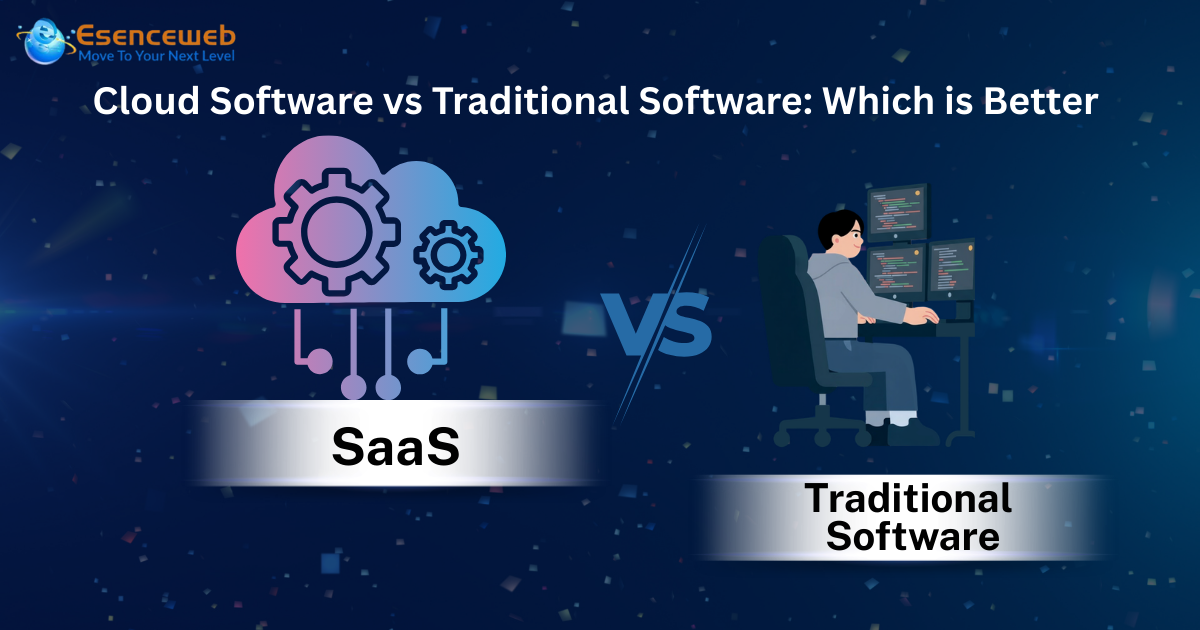
In today's rapidly evolving digital landscape, businesses are constantly searching for technology solutions that improve efficiency, reduce operational costs, and support long-term scalability. One of the most important decisions organizations face is choosing between cloud software and traditional software (on-premise software). With the increasing adoption of cloud computing services, SaaS platforms, and cloud-based business applications, companies are moving toward more flexible and scalable technology solutions.
Understanding the differences between cloud software vs traditional software is essential for businesses planning digital transformation, custom software development, or enterprise software implementation. Both solutions have their own advantages, but cloud-based platforms are becoming the preferred choice for organizations that want remote accessibility, business automation, and cost-effective IT infrastructure.
What is Cloud Software?
Cloud software, also known as cloud-based software or Software as a Service (SaaS), is hosted on remote servers and delivered through the internet. Instead of installing software on local computers or internal servers, users can access cloud applications through web browsers or mobile devices from anywhere in the world. Modern businesses use cloud software solutions such as cloud ERP systems, cloud CRM software, project management tools, and cloud-based business automation platforms to streamline their operations. Cloud computing technology allows organizations to store data securely, collaborate in real time, and scale their resources according to business needs. Companies investing in cloud software development services benefit from advanced infrastructure, automatic software updates, and high system reliability. Because cloud platforms are managed by professional providers, businesses can focus on core operations without worrying about hardware maintenance, server upgrades, or system downtime.
What is Traditional Software?
Traditional software, also referred to as on-premise software, is installed directly on company computers or internal servers within an organization's physical infrastructure. Businesses must purchase software licenses, manage IT hardware, and maintain the entire system internally. This type of software has been widely used for enterprise systems such as accounting software, enterprise resource planning (ERP), and business management tools. While traditional software offers full control over data and system configurations, it requires significant investment in IT infrastructure, system upgrades, cybersecurity, and technical support. Companies using traditional software must handle manual updates, software patching, server maintenance, and data backups, which can increase operational complexity and costs over time.
Key Differences Between Cloud Software and Traditional Software
1. Deployment and Accessibility
One of the biggest differences between cloud software and traditional software is accessibility. Cloud software is accessible from any device with an internet connection, making it ideal for remote teams, multi-location businesses, and global organizations. Employees can access applications, share data, and collaborate in real time regardless of location. Traditional software, however, is typically limited to the devices where it is installed. Accessing the system remotely often requires complex configurations such as VPN connections, which may reduce flexibility and efficiency.
2. Cost and Infrastructure Investment
Cloud software solutions operate on a subscription-based pricing model, allowing businesses to pay only for the services they use. This eliminates the need for expensive hardware infrastructure, dedicated servers, and large upfront investments. Traditional software requires purchasing licenses, servers, and networking equipment. Businesses must also invest in IT staff, system maintenance, and infrastructure upgrades, which can significantly increase the total cost of ownership.
3. Scalability and Business Growth
Cloud computing platforms provide unmatched scalability. Businesses can easily increase or decrease resources such as storage, computing power, and user access based on their requirements. Traditional software systems are less flexible because expanding capacity requires additional hardware installations, server upgrades, and system reconfiguration. This process can be time-consuming and costly for growing businesses.
4. Software Updates and Maintenance
Cloud software providers handle system updates, security patches, and performance improvements automatically. Businesses always have access to the latest features without interrupting operations. In contrast, traditional software requires manual updates, which may involve system downtime, technical support, and complex installation procedures. Maintaining traditional systems can become challenging as technology evolves.
5. Data Security and Backup
Security is a critical concern for businesses handling sensitive data. Modern cloud computing platforms offer advanced security features such as data encryption, multi-factor authentication, automatic backups, and disaster recovery solutions. Traditional software relies on internal security systems managed by the organization’s IT team. If proper security measures are not implemented, businesses may face risks such as data loss, cyberattacks, or system failures.
Advantages of Cloud Software for Businesses
The rapid adoption of cloud-based software solutions is driven by the numerous benefits they offer modern organizations. Businesses choosing cloud platforms can experience improved productivity, reduced operational costs, and enhanced collaboration.
Key benefits of cloud software include:
- Lower infrastructure and
operational costs
- Remote accessibility for employees and teams
-
Automatic updates and system maintenance
- Scalable resources for growing
businesses
- Enhanced data security and backup solutions
- Faster
software deployment and integration
- Real-time collaboration and workflow
automation
These advantages make cloud software development services highly valuable for companies seeking efficient and scalable technology solutions.
When Should Businesses Use Traditional Software?
Although cloud software offers many advantages, traditional on-premise software may still be suitable for certain industries and business environments. Organizations that require complete control over sensitive data, strict regulatory compliance, or offline system operations may prefer traditional software systems. Some enterprises with existing IT infrastructure may also continue using on-premise solutions for critical internal applications. However, many businesses are now adopting hybrid solutions, combining traditional systems with cloud platforms to achieve greater flexibility.
Why Businesses Are Rapidly Moving to Cloud Software
The global shift toward cloud computing, SaaS platforms, and cloud-based enterprise software is transforming how companies operate. Businesses are investing in custom cloud software development, cloud-based web applications, and scalable SaaS solutions to improve efficiency and remain competitive. Cloud technology enables companies to adopt digital transformation strategies, automate workflows, enhance customer experiences, and manage operations more effectively. As remote work and digital collaboration continue to grow, cloud software is becoming a critical component of modern business infrastructure. Organizations partnering with professional software development companies can implement customized cloud solutions tailored to their specific industry needs.
When Should Businesses Use Traditional Software?
Although cloud software offers many advantages, traditional on-premise software may still be suitable for certain industries and business environments. Organizations that require complete control over sensitive data, strict regulatory compliance, or offline system operations may prefer traditional software systems. Some enterprises with existing IT infrastructure may also continue using on-premise solutions for critical internal applications. However, many businesses are now adopting hybrid solutions, combining traditional systems with cloud platforms to achieve greater flexibility.
Why Businesses Are Rapidly Moving to Cloud Software?
The global shift toward cloud computing, SaaS platforms, and cloud-based enterprise software is transforming how companies operate. Businesses are investing in custom cloud software development, cloud-based web applications, and scalable SaaS solutions to improve efficiency and remain competitive. Cloud technology enables companies to adopt digital transformation strategies, automate workflows, enhance customer experiences, and manage operations more effectively. As remote work and digital collaboration continue to grow, cloud software is becoming a critical component of modern business infrastructure. Organizations partnering with professional software development companies can implement customized cloud solutions tailored to their specific industry needs.
Conclusion
Choosing between cloud software vs traditional software depends on a company's operational requirements, budget, and long-term technology strategy. While traditional software offers full control over internal systems, cloud-based platforms provide greater flexibility, scalability, and cost efficiency. For businesses aiming to modernize operations, improve productivity, and support long-term growth, investing in cloud software development, enterprise cloud applications, and scalable business automation solutions is becoming the most effective approach. Companies seeking reliable custom software development services, web application development, mobile app development, and cloud-based business solutions should work with experienced IT partners to build secure, scalable, and future-ready software systems that drive innovation and business success.
FAQs:
1. Is cloud software more secure than traditional software?
- Modern cloud computing platforms provide advanced security features such as data encryption, automatic backups, and disaster recovery systems. However, security also depends on the provider and the company's data protection practices.
2. Can small businesses benefit from cloud software?
- Yes, cloud software solutions for small businesses are highly beneficial because they reduce IT infrastructure costs and allow businesses to access enterprise-level tools without major investments.
3. Which industries benefit the most from cloud software?
- Industries such as e-commerce, healthcare, finance, education, logistics, and IT services benefit significantly from cloud software due to improved data accessibility, scalability, and operational efficiency.
4. Is cloud software more cost-effective than traditional software?
- In most cases, cloud software is more cost-effective because it follows a subscription-based pricing model, eliminating the need for expensive hardware, servers, and maintenance costs.
5. What are examples of cloud software used by businesses?
- Common examples of cloud-based business software include cloud CRM systems, cloud ERP platforms, project management tools, accounting software, and collaboration applications.





.png)
_(1).jpg)
_(2).jpg)
.jpg)

_(1).jpg)

.jpg)
.jpg)
.jpg)
.jpg)
.jpg)


.jpg)
_(1).jpg)
.jpg)
.jpg)


_(1).png)

.png)
1.png)









4.png)


0 Replies to “Cloud Software Vs Traditional Software: Which Is Better”
Leave a Reply
Your email address will not be published.