
 Author Stephen
In today’s hyper-connected digital world, seamless data transmission is the foundation of nearly every IT operation. From cloud computing and data centers to enterprise networking and telecommunications, fast and reliable communication between devices is essential. At the heart of this connectivity lies a small but powerful component known as a transceiver. These devices play a critical role in modern IT Hardware and Computer Hardware ecosystems by enabling the transmission and reception of data across network systems with speed, accuracy, and efficiency.
A transceiver combines both a transmitter and a receiver into a single module, allowing devices to send and receive signals over various types of media such as fiber optics or copper cables. As data demands continue to grow exponentially, transceivers—especially the widely used transceiver module—have become indispensable in building scalable and high-performance network infrastructures.
What Is a Transceiver?
A transceiver is a networking device that integrates transmission and reception capabilities into one unit. Its primary function is to convert electrical signals into optical signals (or vice versa) and transmit them across communication channels. This makes transceivers essential for enabling communication between switches, routers, servers, and storage systems in modern networks.
In enterprise IT Hardware environments, transceivers act as the communication bridge that ensures data flows smoothly across complex systems. Whether it is a data center connecting thousands of servers or a corporate network linking multiple branches, transceivers ensure that information is transmitted efficiently and without interruption.
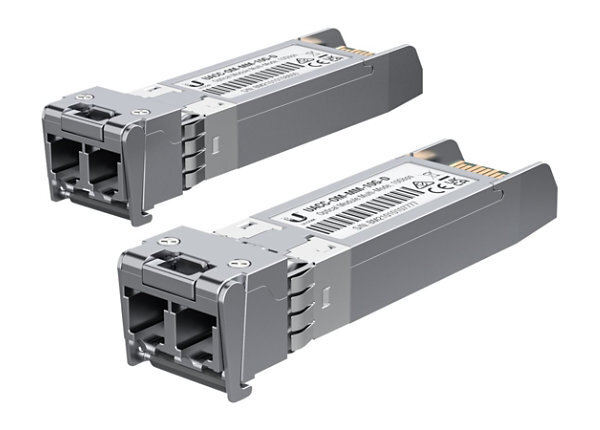
The transceiver module is the most commonly used form factor in networking hardware today. It is hot-swappable, compact, and designed to support various data rates and transmission standards, making it highly flexible for different Computer Hardware configurations.
Role of Transceivers in Modern Networking
Transceivers are fundamental to the performance of modern networking systems. In high-speed environments such as data centers and cloud infrastructures, massive volumes of data must be transmitted every second. Transceivers enable this by converting data into signals suitable for transmission over long distances with minimal loss.
In IT Hardware systems, transceivers connect critical components such as network switches, routers, servers, and storage arrays. Without them, communication between these devices would be slow, unreliable, or even impossible. Their ability to support high bandwidth and low latency makes them a cornerstone of modern Computer Hardware infrastructure.
Additionally, transceivers support various communication protocols such as Ethernet, Fibre Channel, and InfiniBand, allowing them to integrate seamlessly into diverse networking environments.
Types of Transceiver Modules
Transceiver modules come in different types depending on their application, speed, and transmission medium. One of the most common types is the SFP (Small Form-factor Pluggable) transceiver module. SFP modules are widely used in enterprise networks for Gigabit Ethernet connections and offer flexibility in switching between copper and fiber optic cables.
For higher-speed applications, SFP+ modules are used. These support data rates of up to 10 Gbps and are commonly deployed in data centers and enterprise IT Hardware systems that require high-performance connectivity.
QSFP (Quad Small Form-factor Pluggable) modules take performance even further by supporting multiple channels of data transmission simultaneously. QSFP and QSFP28 transceiver modules are often used in high-speed Computer Hardware environments such as hyperscale data centers, cloud computing platforms, and AI-driven infrastructures.
There are also specialized transceiver modules designed for long-distance fiber optic communication, ensuring data can travel across cities, countries, or even continents without significant signal degradation.
How Transceivers Work
The working principle of a transceiver module is based on signal conversion. When a device sends data, the transceiver converts electrical signals into optical signals (in fiber-based systems) or maintains electrical signals (in copper-based systems). These signals are then transmitted through the appropriate medium.
On the receiving end, the transceiver performs the reverse operation, converting incoming signals back into electrical data that can be processed by networking equipment. This bidirectional communication process is what makes transceivers so efficient and essential in modern IT Hardware environments.
Because they support both transmission and reception in a single module, transceivers reduce hardware complexity and improve network efficiency in Computer Hardware systems.
Importance in Data Centers and Enterprise Networks
Data centers are the backbone of the digital economy, and transceivers are a key component in keeping them operational. Thousands of servers, storage systems, and networking devices must communicate seamlessly, often at extremely high speeds. Transceiver modules ensure that this communication happens efficiently and reliably.
In enterprise IT Hardware setups, transceivers are used to connect top-of-rack switches to core switches, enabling high-speed data transfer between server clusters. They also play a critical role in connecting storage systems, ensuring fast access to data for applications and users.
Without transceivers, modern cloud computing, virtualization, and big data processing would not be possible at the scale we see today.
Performance and Speed Considerations
The performance of a transceiver module is measured by its data transfer rate, latency, and compatibility with networking standards. Modern transceivers can support speeds ranging from 1 Gbps to over 400 Gbps, depending on the module type and application.
High-performance transceivers are essential in Computer Hardware environments where large volumes of data must be processed in real time. Applications such as video streaming, financial trading systems, and AI workloads depend heavily on fast and reliable network connections.
Latency is another critical factor. Lower latency transceivers ensure faster communication between devices, improving overall system responsiveness in IT Hardware infrastructures.
Fiber Optic vs Copper Transceivers
Transceivers are designed for both fiber optic and copper-based networks. Fiber optic transceivers use light to transmit data, allowing for extremely high speeds and long-distance communication with minimal signal loss. These are widely used in data centers and backbone network infrastructure.
Copper-based transceivers, on the other hand, are typically used for short-distance communication within racks or between nearby devices. While they are more cost-effective, they do not offer the same speed or distance capabilities as fiber optic solutions.
Both types of transceiver modules are essential in modern Computer Hardware ecosystems, depending on the specific networking requirements.
Hot-Swappable Design and Flexibility
One of the key advantages of modern transceiver modules is their hot-swappable design. This means they can be inserted or removed without shutting down the system. In enterprise IT Hardware environments, this feature significantly reduces downtime and improves operational efficiency.
This flexibility allows network administrators to upgrade or replace transceivers without disrupting services. It also makes scaling network infrastructure much easier, as new transceiver modules can be added as demand increases.
Energy Efficiency and Cost Benefits
Energy efficiency is an important consideration in large-scale networking environments. Transceivers are designed to consume minimal power while delivering high performance. This helps reduce overall energy consumption in data centers, which is a major component of IT Hardware operating costs.
From a cost perspective, transceiver modules provide a scalable and modular approach to networking. Instead of replacing entire systems, organizations can upgrade or change individual modules as needed, making them a cost-effective solution in Computer Hardware infrastructure.
The Future of Transceiver Technology
As demand for higher bandwidth continues to grow, transceiver technology is evolving rapidly. Next-generation transceiver modules are being developed to support 800 Gbps and beyond, enabling faster and more efficient data transmission.
Advancements in silicon photonics and optical integration are also expected to revolutionize transceiver design, making them smaller, faster, and more energy-efficient. These innovations will further strengthen their role in future IT Hardware and Computer Hardware systems.
Conclusion
Transceivers, particularly the transceiver module, are a vital component of modern networking infrastructure. They enable seamless communication between devices, support high-speed data transmission, and ensure the reliability of enterprise networks. From data centers to cloud platforms, transceivers form the invisible backbone of global connectivity.
As technology continues to advance, transceivers will remain essential in powering next-generation IT Hardware systems. Their ability to deliver high performance, scalability, and efficiency makes them indispensable in modern Computer Hardware ecosystems.















.png)
_(1).jpg)
_(2).jpg)
.jpg)

_(1).jpg)

.jpg)
.jpg)
.jpg)
.jpg)
.jpg)


.jpg)
_(1).jpg)
.jpg)
.jpg)


_(1).png)

.png)

1.png)






























4.png)









0 Replies to “Transceivers: Powering Modern Network Connectivity”
Leave a Reply
Your email address will not be published.