
.png)
 Author Jack William
Most businesses treat SEO as a single-country problem. They optimize for one language, one audience, and one version of Google — then wonder why their global growth stalls. The truth is, ranking in seven different countries simultaneously requires a completely different mindset, and that is exactly what a seasoned international SEO expert brings to the table.
This case study breaks down how one international SEO consultant transformed a mid-size SaaS brand into a globally visible authority — driving 380% organic traffic growth across the United States, United Kingdom, Germany, France, India, Australia, and the UAE — in just 14 months.
The starting point: a brand invisible outside its home market
When the consultant was first engaged, the company had a single English-language website with no hreflang tags, no geo-targeted content, and zero presence in non-English search results. Despite a solid product and strong US rankings, 91% of their organic traffic came from one country. Every other market was effectively a blank page.
The opportunity was enormous — but so was the complexity. Each target market required its own keyword research, cultural adaptation, technical configuration, and link authority. This is precisely why businesses need a dedicated international SEO company or specialist, rather than applying a one-size-fits-all domestic strategy.
The 5-pillar international SEO strategy
The consultant built the global expansion on five interconnected pillars. Each one is essential — skip any one and the entire structure weakens.
1. Market prioritization and opportunity mapping
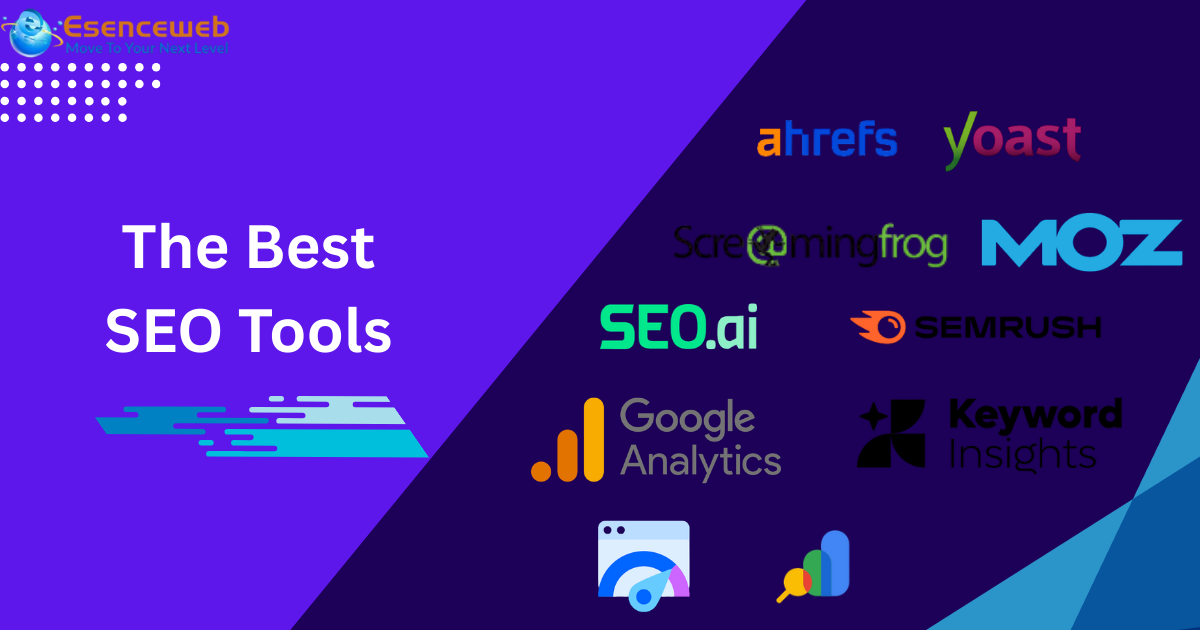
Before writing a single word of content, the international SEO consultant ran a 30-day research sprint. Using tools like Ahrefs, SEMrush, and Google Market Finder, each target country was scored on search demand, keyword difficulty, competitive density, and commercial intent. Germany and India emerged as the highest-opportunity markets beyond the US — two very different languages, audiences, and search behaviors that required fully separate strategies.
2. Technical international SEO infrastructure
This is where most brands fail silently. The consultant implemented a ccTLD and hreflang architecture — giving Google unambiguous signals about which version of each page to serve in which country. URL structures, canonical tags, XML sitemaps, and structured data were all configured per-market. Core Web Vitals were optimized independently for each regional server cluster, since load times affect rankings differently across geographies.
3. Multilingual content built for local intent, not direct translation
Direct translation is one of the most expensive mistakes in global SEO. A phrase that converts in English may have zero search volume in German — or rank for entirely the wrong intent. The consultant partnered with native-speaking SEO writers in each market to build intent-matched content clusters from the ground up. In France, for example, the keyword strategy was rebuilt entirely around French-language search patterns, not translated from English equivalents.
"We stopped thinking in languages and started thinking in markets. Every country has its own Google — its own intent signals, its own competitive landscape, its own trust signals."
4. Country-specific link acquisition
Domain authority earned in the US does not automatically transfer to rankings in Germany or the UAE. The consultant ran parallel link building campaigns in each market — targeting local news outlets, country-specific directories, regional industry publications, and local business associations. This country-level authority building was the single most time-intensive part of the engagement, and also the most impactful for rankings outside the US.
5. Localized conversion optimization
International SEO services go beyond rankings. The consultant worked with the client's UX team to adapt pricing display, currency formatting, social proof, and CTAs for each region. In India, a localized pricing page with INR denomination increased organic conversion rates by 43% compared to the generic USD page.
Results by country: 14-month organic traffic growth
The blended average across all seven markets was 380% organic traffic growth, with India and Germany outperforming every projection. Both markets had lower competitive density at the start of the engagement — a key insight that validates thorough market prioritization before any execution begins.
What makes a great international SEO consultant?
Not every SEO professional has the skills to execute a multi-country strategy. Here is what separates a genuine international SEO expert from a generalist applying domestic tactics globally:
Deep fluency in hreflang, ccTLD structures, and international crawl budget management
Experience running keyword research in non-English languages using native speakers
Proven track record of link acquisition in non-US markets
Understanding of regional Google algorithm behavior and ranking factors
Ability to coordinate content, technical, and authority-building teams simultaneously across markets
Should you hire an international SEO company or a consultant?
The answer depends on your scale and timeline. An international SEO company brings broader bandwidth — multiple specialists handling different markets in parallel. A solo international SEO consultant offers deeper strategic focus, often at lower cost, but may need support teams for execution at scale.
For this client, the consultant operated as a fractional Chief SEO Officer — setting strategy, managing an outsourced team of market specialists, and reporting directly to the CMO. This hybrid model delivered both strategic depth and execution speed.
Key takeaways for businesses pursuing global organic growth
Audit your international technical SEO first
hreflang errors alone can suppress rankings across every target market simultaneously.
Research each market independently
keyword intent, search volume, and competition vary dramatically by country and language.
Build local link authority
country-specific backlinks are non-negotiable for sustained rankings in competitive markets.
Localize, do not translate
content written for local intent outperforms direct translation in every international SEO case study on record.
Measure market-by-market
— use Google Search Console's country filter and set up separate GA4 properties or segments per market to track true performance.
Frequently asked questions
What do international SEO services include?
International SEO services cover hreflang implementation, multi-language keyword research, country-specific content creation, geo-targeted link building, technical site architecture for global crawling, and per-market performance reporting. A full-service international SEO company will also advise on ccTLD vs. subdomain vs. subdirectory structure for your global URL strategy.
How long does international SEO take to show results?
Most international SEO campaigns show meaningful keyword movement in 3–5 months per market, with measurable traffic growth by month 6–9. Newer markets with lower competition, like India and the UAE in this case study, can accelerate faster than saturated markets like the US or UK.
How much does hiring an international SEO consultant cost?
International SEO consultant rates range from $150–$400 per hour for experienced practitioners, or $3,000–$12,000 per month for a retained engagement covering 3–5 markets. An international SEO company offering managed services typically packages pricing per-market, ranging from $1,500 to $6,000 per country per month depending on competition level.












.png)
_(1).jpg)
_(2).jpg)
.jpg)

_(1).jpg)

.jpg)
.jpg)
.jpg)
.jpg)
.jpg)


.jpg)
_(1).jpg)
.jpg)
.jpg)


_(1).png)

.png)

1.png)
























4.png)






0 Replies to “How An International SEO Expert Grew Organic Traffic By 380% Across 7 Countries”
Leave a Reply
Your email address will not be published.